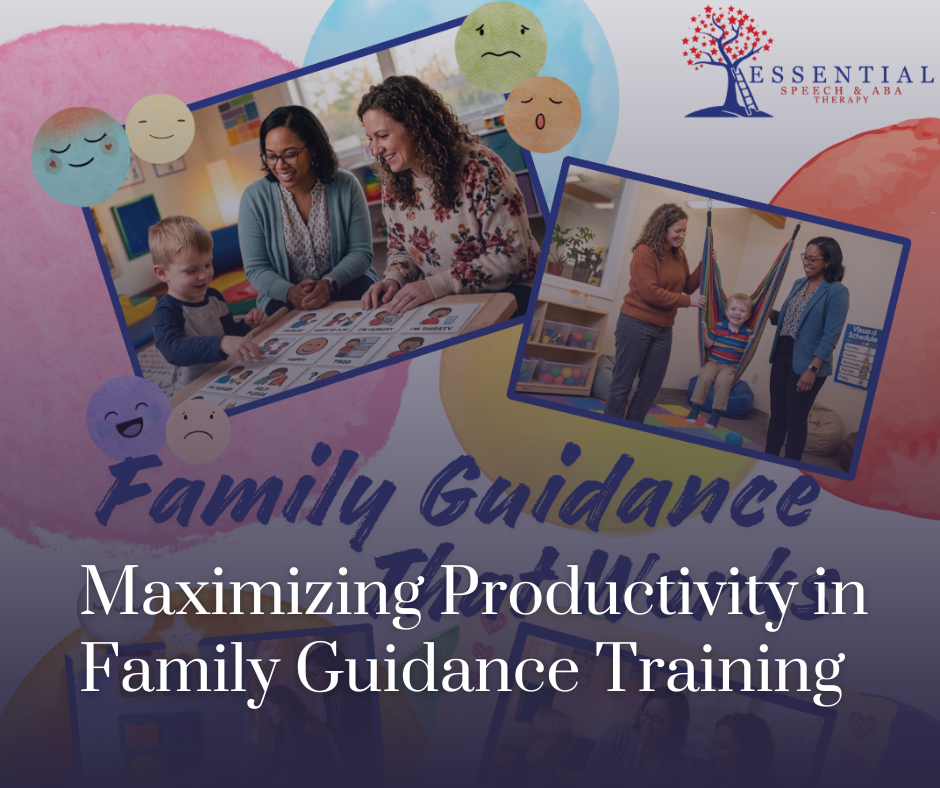
When families begin ABA services, much of the focus is understandably on the therapy sessions themselves. However, one of the most important components of successful treatment often happens outside of direct therapy: Family Guidance Training.
Family Guidance Training is an opportunity for parents and caregivers to learn the strategies, skills, and techniques being used in therapy so they can confidently support their child’s progress at home and in the community. Research consistently shows that children make the greatest gains when the important adults in their lives are actively involved in the treatment process.
As a BCBA, I often hear parents say, “I want to help, but I’m not sure what to do.” The good news is that you do not need to become a therapist to make a meaningful impact. Family Guidance Training is designed to provide practical tools that fit into your everyday routine.
So how can you make the most of these sessions?
Come Prepared
Before your meeting, think about any challenges, successes, or questions you’ve noticed since the last session. Maybe your child is struggling with transitions, refusing certain foods, or using a new word at home. These real-life examples help your BCBA provide guidance that is relevant and immediately useful.
Keeping a small notebook or note in your phone throughout the week can help you remember topics you’d like to discuss.
Be Open and Honest
There is no such thing as a perfect parent, and there is no judgment during Family Guidance Training. The more honest you are about what is and is not working at home, the more effectively your BCBA can support you.
Sometimes strategies that work beautifully in a therapy session need adjustments before they fit naturally into family life. Sharing those challenges helps us create solutions together.
Focus on Small Changes
Parents often want to tackle multiple goals at once, which is completely understandable. However, meaningful progress usually comes from consistently practicing one or two strategies at a time.
Small changes often lead to big results. For example, learning how to encourage your child to request help independently may eventually reduce frustration, increase communication, and improve daily routines.
Consistency is far more powerful than trying to do everything perfectly.
Practice Between Sessions
Family Guidance Training works best when strategies are practiced outside of meetings. Think of these sessions like learning a new skill. Just as you wouldn’t expect to learn a language by attending one class per week, behavioral strategies require practice in everyday situations.
Look for natural opportunities throughout the day to use what you’ve learned during meals, playtime, bath time, shopping trips, or bedtime routines.
Celebrate Progress
It’s easy to focus on what’s next, but don’t forget to celebrate the wins along the way. Progress may look different for every child. Sometimes it’s learning a new word. Other times it’s tolerating a new food, following a direction independently, or transitioning without tears.
These moments matter. Recognizing progress helps keep both parents and children motivated.
Remember: You Are Part of the Team
One of the biggest misconceptions about ABA is that progress only happens during therapy sessions. In reality, parents and caregivers are some of the most important members of the treatment team.
You know your child better than anyone else. Your observations, insights, and involvement help shape meaningful goals and ensure skills are used beyond the therapy setting.
At Essential Speech and ABA Therapy, we view Family Guidance Training as a partnership. Our goal is not only to support your child but also to empower you with the confidence and knowledge needed to help your child succeed in everyday life.
When families and clinicians work together, children have more opportunities to learn, grow, and reach their full potential. That’s why Family Guidance Training is so important—and why making the most of each session can have a lasting impact long after the meeting ends.