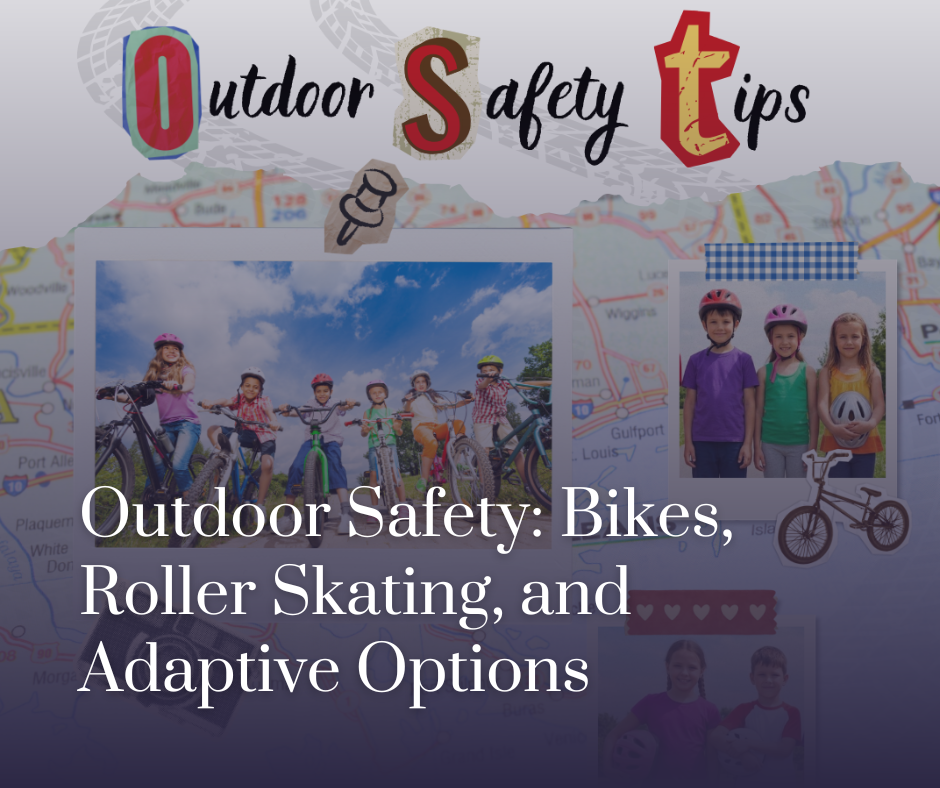
For many children, summer means freedom. Bike rides around the neighborhood, trips to the park, roller skating at the local rink, and family outings on trails create opportunities for fun, exercise, and independence. For children on the autism spectrum, these activities can also provide valuable sensory input, motor skill development, and confidence-building experiences.
However, outdoor recreation presents unique safety considerations. Differences in motor coordination, sensory processing, communication, impulse control, and awareness of danger can increase risk during activities that involve speed, movement, and public spaces.
Safety should never prevent children from participating in outdoor activities. Instead, the goal is to create the right supports so they can explore, learn, and enjoy these experiences as safely as possible. Whether your child is learning to ride a bike, trying roller skates for the first time, or using adaptive equipment, preparation and planning can make all the difference.
Why Outdoor Activities Matter
Physical activity plays an important role in childhood development. Riding a bike, skating, or using a scooter helps children develop:
- Balance and coordination
- Core strength and endurance
- Motor planning skills
- Spatial awareness
- Confidence and independence
For many autistic children, movement-based activities also provide important sensory input. The repetitive motion of pedaling, the vestibular input from gliding, and the proprioceptive feedback from balancing can be regulating and enjoyable.
At the same time, these activities often occur in environments that contain potential hazards, including traffic, uneven terrain, crowds, and unexpected sensory stimuli.
Understanding those risks is the first step toward creating safer outdoor experiences.
The Bike: Freedom and Responsibility
Learning to ride a bike is a milestone that many families eagerly anticipate. For some children, however, mastering the balance, coordination, and safety awareness required for cycling may take additional time and support.
Preparing for Success
Before riding outdoors, consider whether your child has mastered foundational skills such as:
- Following simple safety directions
- Stopping when instructed
- Maintaining attention to surroundings
- Demonstrating basic balance and coordination
Some children benefit from practicing these skills separately before introducing a bicycle.
Visual supports, social stories, and video modeling can help children understand expectations and routines associated with bike riding.
For example, a social story might cover:
- Wearing a helmet
- Stopping at intersections
- Staying on the sidewalk or trail
- Riding near a trusted adult
- What to do if they become separated
Predictability often reduces anxiety and improves safety.
Essential Bike Safety
Every child should wear a properly fitted helmet whenever riding.
Additional safety recommendations include:
- Brightly colored or reflective clothing
- Closed-toe shoes
- Properly fitted bicycles
- Regular equipment inspections
- Adult supervision appropriate to skill level
Parents should also consider their child’s tendency toward impulsive behavior or wandering. A child who may unexpectedly dart into a street requires a different level of supervision than a child who consistently follows safety instructions.
Choosing the Right Environment
Not every child is ready for neighborhood streets immediately.
Consider starting with:
- Empty parking lots
- School playgrounds
- Quiet paved trails
- Closed recreational paths
Practicing in low-risk environments allows children to build confidence before navigating more complex situations.
Roller Skating, Rollerblading, and Scooters
Skating activities present a different set of challenges.
Unlike bicycles, where the equipment provides some stability, roller skates and rollerblades require continuous balance adjustments. Falls are common, especially during the learning process.
For some children, fear of falling may become a barrier. Others may move too quickly without recognizing potential risks.
Protective Equipment Matters
When skating or using scooters, protective equipment should be considered essential.
Recommended gear includes:
- Helmets
- Knee pads
- Elbow pads
- Wrist guards
Head injuries and wrist fractures are among the most common injuries associated with skating activities, making proper equipment particularly important.
Teaching Safe Falling
Many skating injuries occur because children instinctively reach backward or stiffen during a fall.
Learning how to fall safely can reduce injury risk.
Practice sessions might include:
- Bending knees while moving
- Falling forward onto knee pads
- Using protective gear appropriately
- Getting up safely after a fall
Breaking these skills into small, teachable steps often improves confidence and safety.
Sensory Considerations
Roller rinks and busy skate parks can be overwhelming environments.
Loud music, flashing lights, crowded spaces, and unpredictable movement may contribute to sensory overload.
Families may find success by:
- Visiting during less crowded hours
- Bringing noise-reduction headphones
- Practicing at home first
- Creating planned sensory breaks
When children feel regulated, they are often better able to follow safety instructions and respond to changing environments.
Adaptive Equipment: Expanding Access
Not every child learns to ride a traditional two-wheel bicycle or participate in outdoor activities in conventional ways.
Fortunately, adaptive recreation equipment has expanded significantly in recent years.
The goal of adaptive equipment is not to lower expectations. It is to provide access while promoting independence and participation.
Adaptive Cycling Options
Adaptive cycling equipment may include:
- Balance bikes
- Tricycles
- Recumbent bicycles
- Tandem bicycles
- Hand cycles
- Adaptive bikes with trunk supports
- Adaptive bikes with specialized seating systems
For some children, adaptive equipment serves as a temporary stepping stone toward traditional cycling. For others, it becomes a long-term recreational solution that supports independence and community participation.
Finding the Right Fit
Choosing adaptive equipment should be based on a child’s unique strengths and needs.
Factors to consider include:
- Balance abilities
- Muscle tone
- Endurance
- Safety awareness
- Sensory preferences
- Motor planning skills
Occupational therapists and physical therapists can often provide recommendations regarding equipment selection and skill development.
The best equipment is the equipment a child can use safely, confidently, and consistently.
The Community Environment
Many outdoor activities take place in public spaces where additional safety planning may be necessary.
Crowded parks, community trails, and recreational events introduce variables that can be difficult to predict.
Visibility and Identification
If a child has a history of wandering or difficulty responding to their name, consider additional safety measures such as:
- Bright clothing
- Identification bracelets
- Medical ID tags
- GPS tracking devices when appropriate
These tools should never replace supervision, but they can provide an additional layer of protection.
Establishing Clear Rules
Before beginning an activity, review expectations.
Simple, concrete rules often work best:
- Stop when an adult says stop.
- Stay where you can see an adult.
- Do not leave the trail.
- Wait at every intersection.
Visual reminders can be especially helpful for children who benefit from visual learning.
Planning for Emergencies
Accidents can happen even when precautions are taken.
Families may benefit from discussing:
- What to do after a fall
- How to ask for help
- Who safe adults are
- What to do if separated from caregivers
Practicing these scenarios ahead of time can improve confidence and preparedness.
Building Confidence Through Small Successes
One of the most important aspects of outdoor safety is recognizing that skill development takes time.
Some children may learn to ride a bike in a weekend. Others may need months of practice before feeling comfortable.
Progress may look like:
- Wearing a helmet without resistance
- Sitting on a bike independently
- Balancing for a few seconds
- Riding a short distance
- Learning to stop safely
- Completing a full trail ride
Every step matters.
Celebrating incremental successes helps build confidence while reinforcing safe behaviors.
Final Thoughts
Outdoor recreation provides opportunities for growth, exploration, and independence. Activities such as biking, roller skating, and adaptive cycling allow children to build physical skills while creating meaningful family experiences.
For children with autism and other developmental differences, thoughtful preparation can make these activities safer and more enjoyable. By focusing on proper equipment, skill development, environmental awareness, and individualized supports, families can help children participate confidently in outdoor adventures.
The goal is not simply to avoid injuries. It is to create opportunities for children to experience the joy of movement, the pride of mastering new skills, and the freedom that comes from safely exploring the world around them.