One of the first questions many parents ask after scheduling an ABA assessment is, “What should I expect?”
It’s completely normal to feel a little nervous. An assessment can sound intimidating, especially when you’re not sure what will happen. The good news is that an ABA assessment isn’t a test that your child can pass or fail. It’s simply the first step in getting to know your child so we can create a treatment plan that truly meets their needs.
At Essential Speech and ABA Therapy, our goal is to make the assessment as comfortable and natural as possible for both you and your child.
Getting to Know Your Child
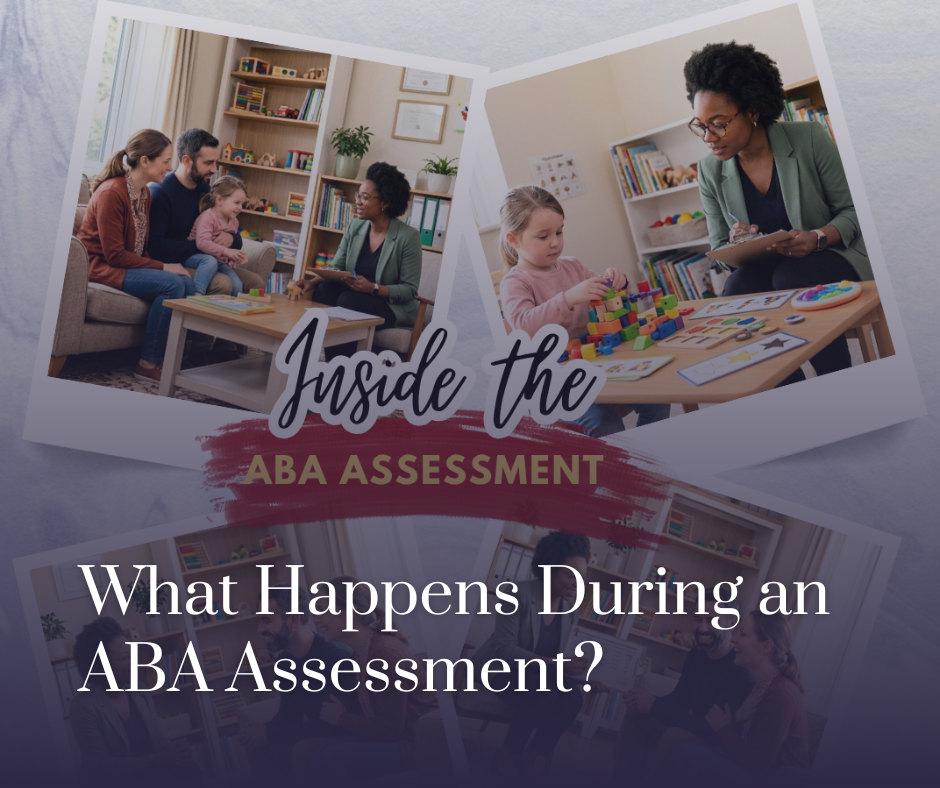
The assessment begins with a conversation. Before we ask your child to do anything, we want to learn about them from the people who know them best: you.
We’ll ask questions about your child’s strengths, interests, communication skills, daily routines, medical history, and developmental milestones. We’ll also talk about any concerns that brought you to ABA and what goals you have for your child.
Every family has a different story, and understanding that story helps us build a treatment plan that fits your child rather than using a one-size-fits-all approach.
Learning Through Play
Many parents are surprised to see that much of the assessment looks like play.
Young children learn best when they’re comfortable and engaged, so we’ll spend time playing with toys, reading books, completing simple activities, and interacting naturally with your child.
During these activities, we’re observing important skills such as:
- Communication
- Play skills
- Social interaction
- Following directions
- Attention
- Problem solving
- Daily living skills
- Learning readiness
Your child may not even realize they’re being assessed, and that’s exactly what we want. We learn the most when children are relaxed and able to show us what they can do naturally.
Looking Beyond Challenges
Many parents worry that the assessment will only focus on what their child cannot do.
In reality, we’re just as interested in your child’s strengths.
Maybe your child has an incredible memory, loves puzzles, enjoys music, or learns quickly when they’re interested in something. Those strengths become some of our greatest teaching tools.
The more we understand what motivates your child, the better we can make learning fun and meaningful.
There Are No Wrong Answers
Some children participate easily during an assessment. Others may be shy, tired, overwhelmed, or simply not interested that day.
That’s okay.
We don’t expect perfection, and we certainly don’t expect children to perform every skill we ask them to do.
As BCBAs, we understand that behavior changes depending on the environment, the time of day, and many other factors. We take all of those things into consideration when interpreting the assessment.
After the Assessment
Once the assessment is complete, your BCBA will review all of the information collected and develop individualized treatment recommendations.
These recommendations may include goals for areas such as communication, social skills, daily living skills, emotional regulation, or reducing behaviors that interfere with learning.
We’ll also discuss the recommended number of therapy hours and explain why those recommendations were made. Most importantly, we’ll answer your questions and make sure you understand the next steps.
Remember, You Are Part of the Process
Parents sometimes worry that they need to have all the answers during the assessment.
You don’t.
Your role is simply to share what you know about your child. Your observations, concerns, and goals are incredibly valuable because you see your child in ways no assessment ever could.
The assessment is not something that happens to your family. It’s something we do together.
Final Thoughts
An ABA assessment is much more than paperwork or checklists. It’s the beginning of a partnership.
It’s our opportunity to learn who your child is, what they enjoy, what they’re already doing well, and where they may need additional support. Every recommendation we make is based on helping your child become more independent, communicate more effectively, and participate more fully in everyday life.
At Essential Speech and ABA Therapy, we know that taking the first step can feel overwhelming. That’s why we strive to make the assessment process welcoming, collaborative, and centered around your child. By the end of the assessment, our hope is that you’ll leave with a better understanding of your child’s strengths, a clear plan for moving forward, and confidence that you have a team ready to support your family every step of the way.