
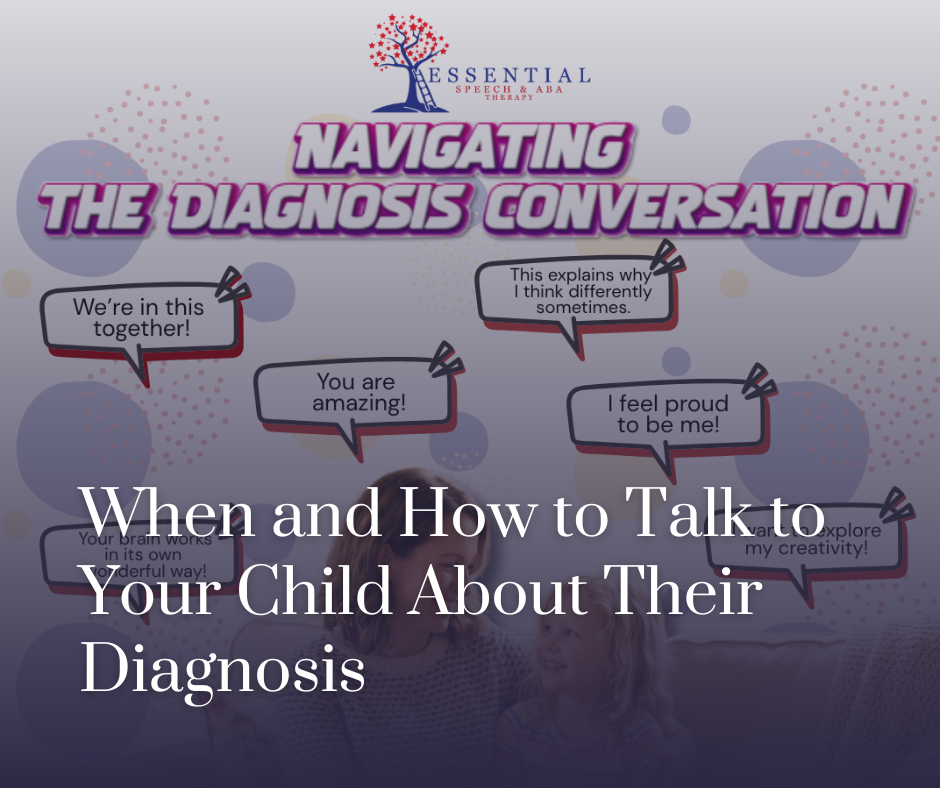
As a BCBA, one of the questions I hear from parents is, “When should I tell my child they have autism?”
It’s a question that doesn’t have a perfect answer because every child is different. Some children begin asking why they go to therapy at a young age, while others don’t become curious until they’re older. What I do know is this: children deserve honest conversations about who they are.
I don’t believe autism should be treated like a secret or something we avoid talking about. Children are incredibly perceptive. They notice when they attend therapy while their classmates don’t. They notice when social situations feel harder or when they need extra support in school. If we don’t help them understand those differences, they may come up with their own explanations, and those explanations are often much harder on themselves than the truth.
Start with Their Questions
Many parents feel like they need to plan the “perfect” conversation, but in reality, these discussions often happen naturally.
Maybe your child asks, “Why do I go to ABA?” or “Why is talking so hard for me?”
Those questions are wonderful opportunities to begin the conversation.
You don’t have to explain everything at once. Start with simple, honest answers that match your child’s age and understanding.
You might say, “You have autism. Autism means your brain works a little differently. Some things come really easily to you, and some things take a little more practice. That’s why you have people who help you learn new skills.”
As your child grows, so will the conversation.
Be Honest About the Challenges
Sometimes, in an effort to protect our children, we avoid talking about the parts of autism that are difficult. While it’s important to stay positive, it’s equally important to be honest.
Autism can make communication, social interactions, flexibility, and managing emotions more challenging. Your child may notice these differences on their own.
Acknowledging those challenges doesn’t make them bigger. Instead, it helps your child understand that there is a reason some things feel harder and that they are not alone.
I also remind families that every person, whether autistic or not, has strengths and challenges. Autism simply explains why certain areas may require more support.
Celebrate Their Strengths
The conversation shouldn’t only focus on what is difficult.
Many autistic children have incredible strengths. They may have amazing memories, notice details others miss, think creatively, develop deep interests, or show incredible honesty and determination.
Help your child recognize both sides of who they are.
You might say, “Your brain helps you notice things other people don’t. That’s a really special strength. It also means some situations can feel overwhelming, and that’s okay. We’ll keep learning ways to make those situations easier.”
Children benefit from knowing they are valued exactly as they are while also understanding that everyone has skills they continue to develop.
Explain Why Therapy Helps
Children often wonder why they spend time in ABA, speech therapy, or occupational therapy.
I like to explain that therapy isn’t about changing who they are. It’s about helping them build skills that make everyday life easier.
We work on things like communicating wants and needs, making friends, handling frustration, becoming more independent, and learning strategies for situations that feel difficult.
The goal isn’t to make your child less autistic. The goal is to give them the tools they need to be successful while honoring who they are.
Keep the Conversation Going
Talking about autism shouldn’t be one big conversation that happens once and never again.
As children grow, they’ll have new experiences, new questions, and a deeper understanding of themselves. Continue checking in with them. Ask how they’re feeling. Listen more than you talk.
Most importantly, let them know that autism is something they can always ask questions about.
Final Thoughts
An autism diagnosis can bring many emotions for parents. For children, though, it often brings something different. It gives a name to experiences they’ve already been having.
I’ve seen children become more confident when they understand why certain things feel harder for them. Instead of wondering, “What’s wrong with me?” they begin to think, “My brain works differently, and that’s okay.”
That shift is incredibly powerful.
At Essential Speech and ABA Therapy, we believe every child deserves to understand themselves with honesty, compassion, and confidence. Autism is one part of who they are. It doesn’t define their future, limit their potential, or determine what they can accomplish. With the right support, encouragement, and opportunities, autistic children can build meaningful relationships, learn lifelong skills, and achieve goals that matter to them.
As parents, one of the greatest gifts we can give our children is helping them know that they are understood, accepted, and loved exactly as they are.