Many of us in the field of Applied Behavior Analysis (ABA) stumble into this profession by accident. We start with a simple, shared motivation: a love for working with children and a desire to support those who navigate the world differently.
My journey began as an in-home respite provider. The “lightbulb moment” happened after a terrifying incident where a young client eloped from school. He was found safely playing in a creek hours later, but the experience changed everything. His family pulled him from school to focus on functional, real-world skills at home. Within months, I saw him gain independence I never thought possible. Witnessing how ABA could empower someone to communicate their needs and stay safe had me hooked. I knew I wanted to facilitate that kind of growth.
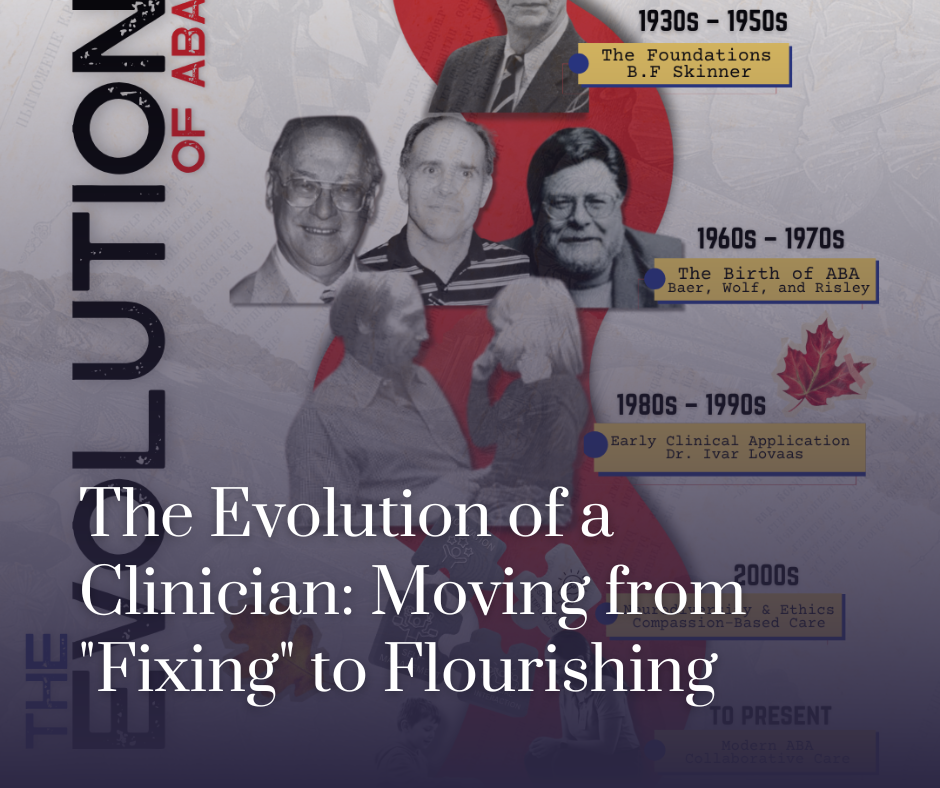
As I progressed from an RBT to a BCBA, I saw the incredible power of this science. However, I also encountered practices that, with the benefit of hindsight and evolving ethics, I no longer view as appropriate or effective. Like any science, ABA has evolved. It began with the observation that behavior is shaped by the environment. But as the saying goes, “With great power comes great responsibility.”
In the mid-20th century, neurodivergent individuals were often institutionalized. By the 1980s, Ivar Lovaas began studying intensive intervention, but his work centered on “recovery” and “attaining normalcy.” This “recovery” narrative, combined with the rise of insurance mandates in the 2000s, cemented the Medical Model we operate under today.
To understand the shift we need, consider the difference between the Social and Medical models of disability:
- The Social Model: If a person uses a wheelchair, the community builds ramps. The goal is to change the environment to maximize accessibility and minimize limits.
- The Medical Model: The focus is on the individual’s “inability” to walk, pushing for physical intervention so they no longer need the ramp.
In ABA, the Medical Model currently holds a tight grip. Every six months, I submit treatment plans where insurance companies decide what is “medically necessary.” Often, they focus strictly on “remediating symptoms of Autism Spectrum Disorder.” If I propose a goal for independence in mealtime or hygiene, it may be denied as “not medically necessary.” Instead, insurance often prioritizes goals that target diagnostic “deficits”—like increasing eye contact or decreasing “stereotypy” (stimming).
As a young clinician, I wrote those goals. I played into the medical model because it was the system I was taught. I look back on that now with a commitment to do better. My doctoral studies were driven by a desire to find a more ethical path. We now know that we can support autistic individuals without placing “recovery” or “masking” at the center of our work.
I want to acknowledge that for individuals significantly impacted by their diagnosis—those facing severe self-injury or aggression—high levels of support are vital. They must not be lost in this conversation. However, I hold the belief that if we shift our focus (goals) toward communication, autonomy, and environmental flexibility, every individual benefits—regardless of where they fall on the spectrum.
Our Mission at Essential Speech and ABA Therapy
Today, as the Director of Clinical Quality at Essential Speech and ABA Therapy, my goal is to empower our clinicians to navigate these dynamics differently. I want to help our team do better than I did as a young clinician. We strive to write goals and programming that support individuals in their daily environments, allowing them to thrive without “masking” or pretending to be someone they are not.
The True Goal of Our Services: If a client begins intensive early intervention services and, a year or two later, moves to a less intrusive environment still loving what they love, moving their bodies the way they need to to regulate, and communicating their needs effectively while coping with the complexities of their world—that is success.
We aren’t here to change who our clients are; we are here to give them the tools to navigate the world as their most authentic selves.