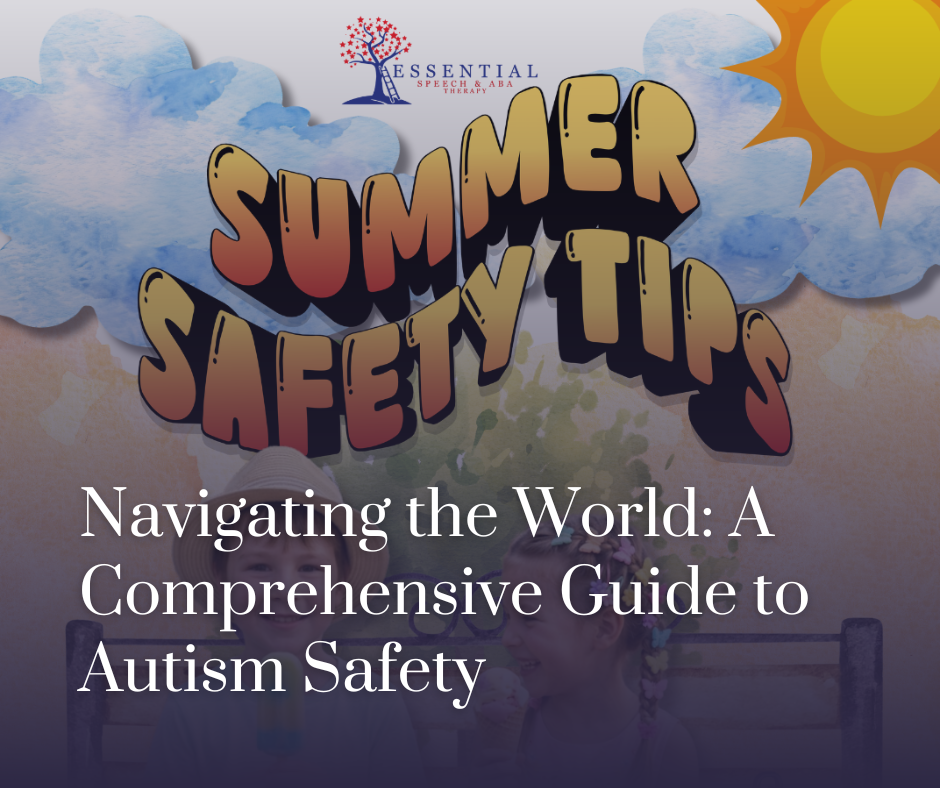
For families of children on the autism spectrum, the world can feel like a beautiful but unpredictable landscape. While the desire to explore new horizons is universal, the safety challenges can be significant. Individuals with Autism Spectrum Disorder (ASD) often experience sensory differences, communication barriers, and differences in the way they navigate social situations. Sometimes, this can manifest in behaviors that are potentially unsafe (for example: elopement, self-injury, aggression).
Safety isn’t about limiting experiences; it’s about building a scaffolding of preparation, advocacy, and sensory management that allows individuals on the autism spectrum to thrive in diverse settings. This guide explores three specific, high-risk environments: airplanes, water, and festivals, providing actionable strategies to ensure safety and peace of mind.
The Skies: Airplane and Airport Safety
Air travel is a marathon of sensory input. From the echoing halls of the terminal to the pressurized cabin and the rumble of jet engines, the experience is designed for efficiency, not necessarily for neurodiversity. For an autistic individual, the loss of routine and the physical confinement of a plane can trigger intense anxiety or “flight” responses.
The Preparation Phase
Safety in the air begins weeks before takeoff. Social Stories can be invaluable here. Create a visual narrative that explains the entire process: the security line, the waiting at the gate, the “ear pop” during ascent, and the necessity of the seatbelt. Familiarity often reduces the fear of the unknown, which may be a driver of meltdowns in airports.Social stories should not just be read, but interacted with in a way that each child can remember key information. This approach may not be appropriate for all children.
Navigating Security
The TSA checkpoint is often the most volatile part of the journey. In the United States, the TSA Passenger Support Specialist program can serve as a vital resource. You can request a specialist in advance who is trained to assist travelers with disabilities through the screening process. Additionally, the Hidden Disabilities Sunflower Lanyard is becoming globally recognized; wearing it discreetly signals to staff that the traveler may need extra time or clear, simple instructions.
Onboard Safety Measures
- The “Safe Seat”: Request bulkhead seating if the individual needs more legroom to move, or a window seat to provide a fixed point of focus and prevent bumping by carts in the aisle.
- Seatbelt Compliance: For those who struggle with the tactile sensation of a seatbelt or try to unbuckle during flight, consider an FAA-approved CARES harness. It provides additional torso support and is safer for children who might slip out of a standard lap belt.
- Communication Cards: Prepare a small deck of cards for flight attendants. These should briefly state: “My child is autistic. They may [hum/cover ears/not make eye contact]. They are safest when [given space/offered a snack]. Thank you for your patience.”
Water Safety and Wandering
Statistically, water represents the single greatest safety threat to the autism community. According to the National Autism Association, accidental drowning accounts for approximately 90% of total deaths reported in children with autism ages 14 and younger who wander. The attraction to water—often referred to as “aquatic fascination”—is common, likely due to its shimmering visual properties and the sensory input of submersion.
Why the Attraction?
Many individuals with autism find water calming. It provides a weightless environment that can soothe a dysregulated nervous system. However, some individuals experience a lack of an innate sense of danger which could mean an individual might walk into a lake or pool without understanding the risk of drowning.
Layers of Protection
Water safety requires a “layers of protection” approach. No single measure is foolproof.
- The “Big Three” of Swimming: Every autistic child should be enrolled in specialized Adaptive Swim Lessons. These lessons focus on survival skills—floating, treading water, and finding the edge—rather than traditional strokes.
- Physical Barriers: If you live near water or have a pool, high-quality fencing is non-negotiable. Use self-closing, self-latching gates with locks placed high out of reach. For vacations, use portable door alarms on hotel or rental home doors to alert you if a door is opened.
- Life Jackets as Standard Wear: In any environment near water (docks, boat decks, or even crowded beach areas), a well-fitted, Coast Guard-approved life jacket should be worn at all times, regardless of swimming ability.
The Crowd: Festivals, Fairs, and Public Events
Festivals are a sensory explosion. The smells of fried food, the thumping bass of live music, and the unpredictable movement of large crowds can lead to sensory overload. In this state, an autistic person may be at a higher risk of “eloping” to find a quiet space, which is incredibly dangerous in a crowd of thousands.
The Digital Safety Net
In a crowded festival, a child can disappear in seconds. Modern technology offers a secondary layer of safety. GPS Tracking Devices (like Jiobit, AngelSense, or AirTags) can be integrated into clothing or worn as a wristband. However, technology can fail or be removed. Physical Identification is equally important. Temporary tattoos or “If Lost” bracelets that include a caregiver’s phone number and the mention of “Autism / Non-Verbal” could be essential.
Managing the Environment
Before arriving, study the festival map to identify “Quiet Zones” or First Aid stations. Many modern festivals now provide sensory tents or trailers. Use these proactively—don’t wait for a meltdown to occur. Schedule frequent “sensory breaks” in these quieter areas to keep the individual’s nervous system regulated.
Practical Gear for Festivals
- Noise-Canceling Headphones: These can be an effective tool for preventing sensory-driven elopement at festivals. High-quality headphones can reduce the “wall of sound” to a manageable level. Try different types of headphones, and it may be useful to play quiet preferred music to help your child keep the headphones in place.
- Strollers/Wagons as Safe Spaces: For younger children or smaller adults, a specialized large-size stroller or a wagon can act as a mobile “safe room.” It provides a physical boundary between them and the crowd.
- High-Visibility Clothing: Dress the individual in a bright, unique color (like neon orange or lime green). Take a photo of them in that exact outfit on your phone the moment you arrive at the festival. If they go missing, you can show police exactly what they look like that day.
The Universal Constant: Identification and Disclosure
Across all three environments, the way an autistic person interacts with first responders or security personnel is a critical safety factor. Many autistic individuals may not respond to their name when called, may hide in dangerous spots when scared, or may react aggressively to being touched by a stranger in uniform.
Medical ID Jewelry: A simple bracelet or dog tag that says “Autism” and “Non-Verbal” or “Sensitive to Touch” can change the course of an emergency. If an individual is found wandering, this ID tells the finder exactly how to approach them.
The “Letter of Intent” or Emergency Profile: Keep a digital and physical copy of a one-page “Emergency Profile.” This should include the individual’s photo, triggers, favorite calming topics, and any medical conditions (like epilepsy, which frequently co-occurs with autism). In the chaos of an airport or a crowded festival, being able to hand a piece of paper to a police officer is much more effective than trying to explain a complex diagnosis while panicking.
Conclusion: Empowering Exploration
The goal of autism safety isn’t to create a bubble, but to build a bridge. By acknowledging the specific risks associated with airplanes, water, and public festivals, we can implement strategies that mitigate danger while maximizing inclusion. Safety is a collective effort involving the family, the individual, and the community at large. With the right tools—from GPS trackers and social stories to adaptive swim lessons and sensory gear—the world becomes a much more accessible place for neurodivergent explorers.