
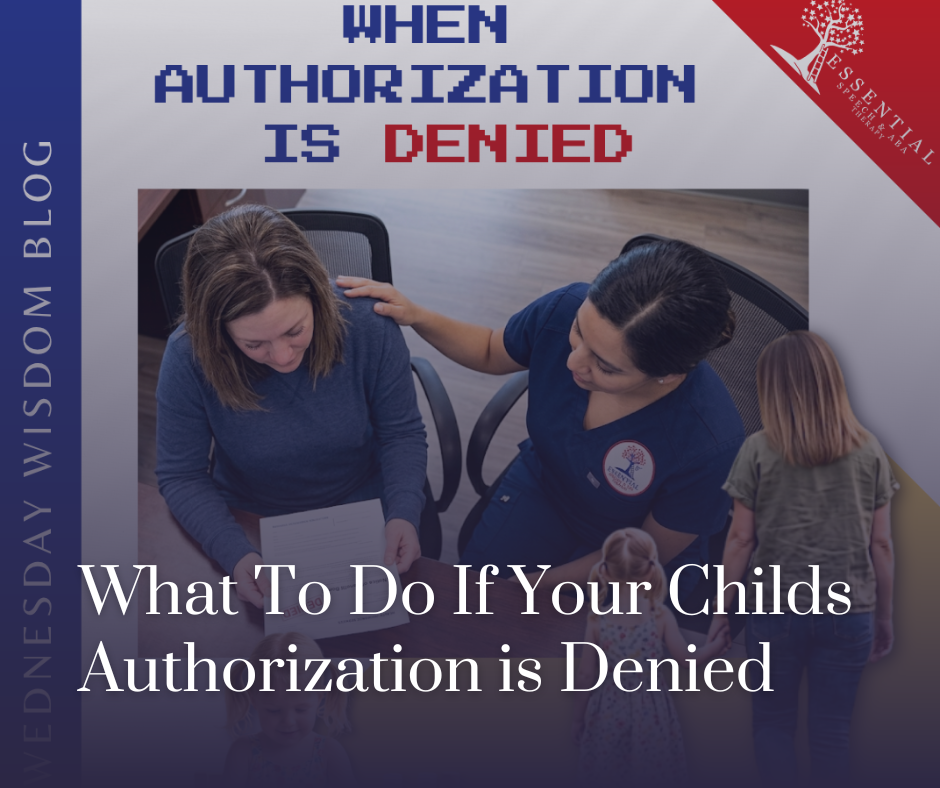
Receiving the news that your child’s insurance authorization has been denied can feel overwhelming.
After scheduling evaluations, completing paperwork, and preparing for therapy, hearing the word “denied” may leave you feeling frustrated, confused, or worried about what comes next.
The good news is that a denial does not always mean your child cannot receive services. In many cases, it simply means the insurance company needs additional information before making a final decision.
Understanding the process can help reduce stress and make it easier to navigate the next steps.
What Does an Insurance Authorization Denial Actually Mean?
Many therapy services, including ABA therapy, speech therapy, and occupational therapy, require prior authorization from insurance companies.
During this review process, the insurance company evaluates information such as:
- Your child’s diagnosis
- Clinical evaluations
- Physician referrals
- Treatment recommendations
- Medical history
- Insurance plan benefits
The goal is to determine whether the requested services meet the requirements outlined in your specific insurance policy.
While a denial can feel personal, it is important to remember that authorization decisions are based on insurance guidelines—not your child’s worth, potential, or need for support.
A denial simply means the insurer believes something is missing or requires further review.
Why Insurance Companies Require Prior Authorization
Insurance companies use prior authorization to determine whether services meet their definition of medical necessity and align with the benefits included in a family’s plan.
Unfortunately, the process is not always straightforward.
Even when therapy is clearly recommended by providers, insurance companies may request additional information before approving services.
That is why denials are often part of the review process rather than a final answer.
Common Reasons Therapy Authorizations Are Denied
Every denial comes with a reason. Understanding that reason is the first step toward resolving the issue.
Missing or Incomplete Documentation
One of the most common reasons for denial is missing paperwork.
Examples may include:
- Physician referrals
- Diagnostic evaluations
- Progress reports
- Clinical assessments
- Updated medical records
Sometimes documentation has already been submitted, but the insurance company requests additional clarification or more detailed information before making a decision.
Insurance Plan Coverage Limitations
Not all insurance plans provide the same benefits.
Some policies place limits on:
- The number of therapy hours covered
- Types of services available
- Age restrictions
- Network requirements
In some cases, an authorization may be denied because the requested services exceed what the policy currently allows.
When this happens, our team works to better understand the denial and identify potential alternatives.
Questions About Medical Necessity
Insurance companies often review requests through the lens of “medical necessity.”
In simple terms, they want to understand:
- Why therapy is needed
- How it will benefit your child
- Why the recommended treatment plan is appropriate
If the documentation does not clearly demonstrate these factors, the request may be denied pending additional information.
This does not necessarily mean your providers disagree with the decision. Often, it simply means more clinical documentation is needed to provide a complete picture of your child’s needs.
Administrative and Billing Errors
Sometimes a denial has little to do with clinical services at all.
Administrative issues can include:
- Incorrect member identification numbers
- Outdated insurance information
- Missing signatures
- Coding errors
- Provider credentialing updates
While frustrating, these situations are often resolved quickly once corrections are made.
What Happens After a Denial Is Received?
When we receive a denial, our team immediately reviews the explanation provided by the insurance company.
Understanding the reason for the denial helps determine the most effective next step.
Depending on the situation, we may:
- Gather additional documentation
- Request updated evaluations
- Correct administrative errors
- Submit missing paperwork
- Obtain additional physician recommendations
- Strengthen the clinical justification for services
In some situations, we may also submit a formal appeal.
Understanding the Appeals Process
An appeal is simply a request for the insurance company to take another look at your child’s case.
The appeal process allows providers to submit additional information that may not have been included in the original review.
This can include:
- Updated evaluations
- Progress reports
- Letters of medical necessity
- Physician recommendations
- Additional clinical documentation
Many insurance companies offer multiple levels of appeal, and it is not uncommon for services to be approved after additional information is reviewed.
A denial is often a step in the process—not the end of it.
How Families Can Help Move the Process Forward
Although much of the authorization process happens behind the scenes, families play an important role.
Respond Quickly to Documentation Requests
If our team contacts you requesting information, responding promptly can help avoid unnecessary delays.
This may include:
- Updated insurance cards
- Physician referrals
- Medical records
- Signed consent forms
- Other required paperwork
The sooner we receive the information, the sooner we can continue working on your child’s authorization.
Share Insurance Updates Immediately
Even small insurance changes can affect the authorization process.
Please let us know if:
- Your employer changes insurance carriers
- You receive a new member ID number
- You add secondary insurance
- Your coverage changes in any way
Accurate insurance information helps prevent avoidable delays.
Forward Insurance Letters to Our Team
Insurance companies often send letters directly to families regarding authorization decisions.
These letters may contain:
- The reason for the denial
- Requests for additional documentation
- Appeal deadlines
- Instructions for next steps
Sharing these letters with our office allows us to respond more effectively and keep the process moving.
Contact Your Insurance Company if Needed
Some families find it helpful to speak directly with their insurance company.
If you choose to call, consider asking:
- Why was the authorization denied?
- Is additional documentation needed?
- Can an appeal be submitted?
- What deadlines apply?
Keeping notes from these conversations—including dates, representative names, and reference numbers—can be helpful throughout the process.
How Long Does an Authorization Appeal Take?
One of the most common questions we hear is, “How long will this take?”
Unfortunately, every insurance company operates on different timelines.
Some denials can be resolved within a few days. Others, particularly those requiring formal appeals, may take several weeks.
While waiting can be difficult, our team works diligently to move every authorization through the process as efficiently as possible.
We understand how important timely access to services is for your child and family.
Does a Denial Mean My Child Can’t Receive Therapy?
In most cases, the answer is no.
An initial denial does not automatically mean your child has permanently lost access to services.
Many authorizations are ultimately approved after:
- Missing documentation is submitted
- Administrative issues are corrected
- Additional clinical information is provided
- Appeals are completed successfully
Every situation is unique, but a denial should rarely be viewed as the final outcome.
Instead, it is often an opportunity to provide additional information that supports your child’s need for services.
Ways to Prevent Future Authorization Delays
While no family can completely prevent an insurance denial, there are steps that can help reduce delays.
These include:
- Keeping insurance information current
- Attending scheduled evaluations
- Completing paperwork promptly
- Maintaining communication with your care team
- Sharing insurance correspondence as soon as it is received
These simple actions help ensure we have the information needed to advocate effectively on your child’s behalf.
You’re Not Navigating This Process Alone
Insurance can sometimes feel like an entirely different language.
Between unfamiliar terminology, changing requirements, and lengthy review processes, it is understandable to feel overwhelmed.
The good news is that you do not have to navigate it alone.
Our team works with insurance companies every day and is committed to helping families understand each step of the process.
We are here to answer questions, provide updates, and advocate for your child throughout the authorization journey.
A Denial Is Often a Detour, Not a Dead End
Most importantly, a denial does not define your child’s needs, abilities, or potential.
It is simply an administrative decision that often requires additional information before services can move forward.
We remain committed to advocating for your child, keeping you informed throughout the process, and doing everything we can to help your family access the care your child deserves.
If you ever have questions about your child’s authorization or would like an update on its status, please don’t hesitate to reach out.
We’re here to help, and we’re honored to be part of your child’s journey.