When your child is diagnosed with autism, you’re introduced to an entirely new world—new therapies, new routines, and even new ways of communicating. One of the first things many parents notice is the language professionals use when referring to their child. You may hear phrases like “child with autism” or “autistic child” and wonder if there is a right or wrong way to say it. While it may seem like a small difference, the language we use can carry meaning, shape perception, and influence how children come to understand themselves.
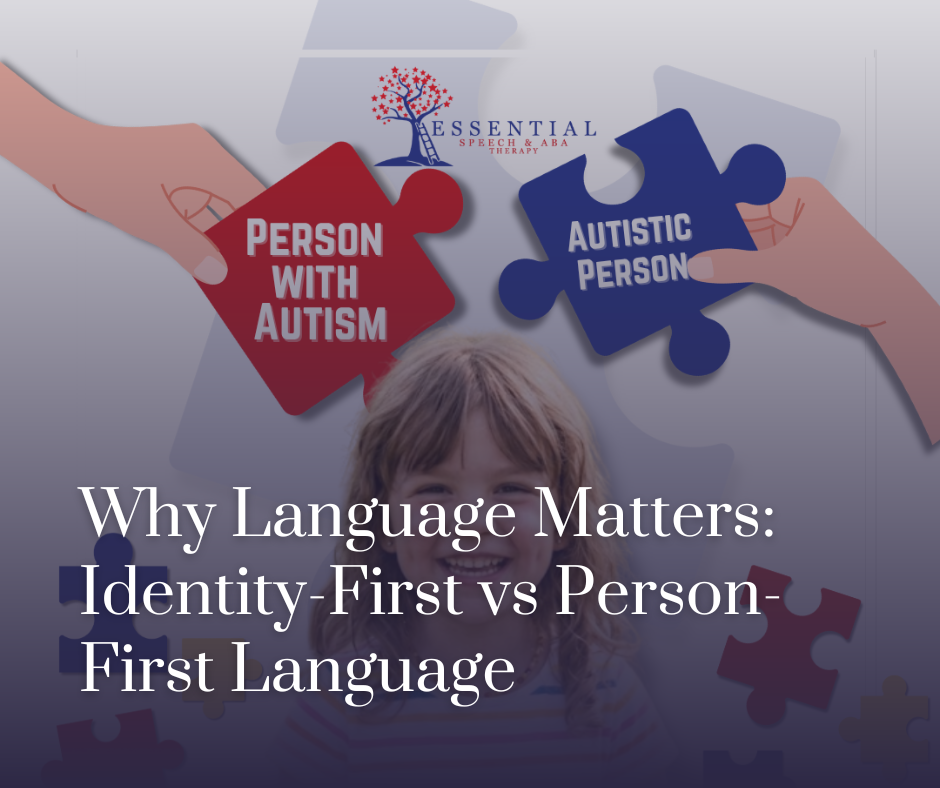
Person-first language, such as “child with autism,” was developed to emphasize the individual before the diagnosis. This approach became widely adopted in healthcare and education as a way to ensure that individuals were not defined solely by a condition. The intention behind this language is respectful—it places the child first and separates the diagnosis from who they are as a person. Many professionals continue to use person-first language because it aligns with clinical standards, documentation requirements, and a long-standing effort to promote dignity and individuality.
On the other hand, identity-first language, such as “autistic child,” views autism as an integral part of a person’s identity rather than something separate from them. This perspective is commonly embraced within the autistic community itself. Many autistic individuals prefer identity-first language because it acknowledges autism as a natural and meaningful part of how they experience the world. Rather than something to distance from, it is something that shapes their perspective, communication style, and strengths. For these individuals, identity-first language can feel more honest, affirming, and empowering.
Understanding these two approaches is important because language does more than describe—it influences mindset. The words we choose can subtly shape how we think about autism. Person-first language can feel more clinical and structured, often reflecting a medical perspective. Identity-first language can feel more accepting and integrated, aligning with a neurodiversity perspective that values differences rather than viewing them as deficits. Neither approach is inherently right or wrong, but they do reflect different ways of understanding autism.
As your child grows, language may also play a role in how they see themselves. Children are constantly absorbing how others talk about them, and over time, they begin forming their own identity. Some individuals grow to prefer identity-first language because it supports a sense of pride and self-acceptance. Others prefer person-first language because it feels less labeling or more individualized. What matters most is that your child has the opportunity to develop their own voice and preferences as they get older.
Language also becomes especially important when advocating for your child. Whether you are speaking with therapists, educators, insurance providers, or family members, understanding both person-first and identity-first language allows you to communicate more effectively. In clinical and insurance settings, person-first language is still commonly used and often expected. In community, advocacy, and self-advocate spaces, identity-first language may be more prevalent. Being familiar with both helps you navigate these environments with confidence while respecting different perspectives.
It is also worth noting that the field of autism services is evolving. While person-first language has traditionally been considered best practice in clinical settings, there is growing awareness of neurodiversity-affirming approaches. Many providers are listening more closely to autistic voices and recognizing the importance of language in shaping long-term self-esteem and identity. This shift does not mean one approach replaces the other, but rather that there is increasing room for flexibility, respect, and individualized preference.
For parents, this can feel like a lot to take in—especially early in the journey. It is completely normal to feel unsure about what language to use, and it is important to remember that there is no perfect answer. You are allowed to choose what feels most natural for your family, and that choice can evolve over time. As your child grows and develops their own preferences, those preferences can guide how you speak about autism moving forward. In the meantime, approaching language with openness and respect is more important than getting every word exactly right.
If you are ever unsure, it is okay to ask. Many individuals appreciate being given the opportunity to share their preferences, and this simple act shows respect and willingness to learn. At the same time, it is equally important to give yourself grace. You are learning a new system, a new vocabulary, and a new way of supporting your child—all at once. That is no small task.
At its core, this conversation is about more than just words. It is about how we view, support, and value individuals with autism. Whether you find yourself saying “child with autism” or “autistic child,” what your child will feel most is your understanding, your advocacy, and your acceptance. Language plays a role, but it is your actions, consistency, and support that truly shape their experience.
By taking the time to learn about identity-first and person-first language, you are already demonstrating a thoughtful and intentional approach to parenting. You are building the foundation for strong advocacy, respectful communication, and a deeper understanding of your child’s world. And ultimately, that is what matters most.